
For a Few Hours, Everything Changes
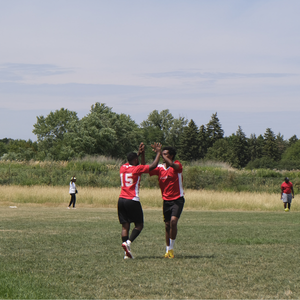 By the time practice officially begins, the field is already full.
Training starts at 3:00 p.m., but players begin arriving hours early, warming up, passing soccer balls, and calling out to one another across the field. Some come straight from school. Others rush over after work. No one wants to miss it.
“You see a different person,” says Jesús Mejía, settlement counsellor, who volunteered with the Refugee Cup in 2024 and 2025. “In the shelter, the residents are worried. They’re stressed. But when it comes to soccer, everything changes.”
From May to mid-July, the Sojourn House team trained three times a week, completing 30 practices and more than 60 hours on the field. Along the way, they became more than teammates.
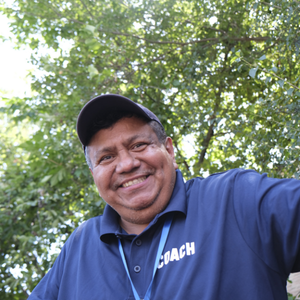
Jesús Mejía, Settlement Counsellor
“It feels like a big family,” Jesús says. “The camaraderie, the friendships, the sense of belonging. That’s what stands out.”
On the field, language barriers fade. Players from different countries and cultures connect through a shared love of the game.
“We all have different languages,” Jesús says. “But soccer is universal.”
That sense of connection carries beyond practice. Over the course of the season, Jesús watched players grow more confident and energized.
“For those few months, they’re more lively,” he says. “You can see it.”
One player described the tournament this way:
“When I play soccer, I forget about everything back home, the family that I left behind, work and all other issues in life.”
In 2025, Sojourn House brought home the Refugee Cup. The championship was worth celebrating, but the season’s greatest achievement couldn’t be measured by the final score. Week after week, the field became a place where refugee claimants could find friendship, confidence, and a sense of belonging as they built new lives in Canada.